Immersive food experiences are helping Tunisian producers turn their culinary knowledge into new opportunities
By Kacie Morgan
Floral waters, fiery harissa, freshly ground spices and syrup-soaked sweets might be what first draws you into Tunisia’s food culture, but behind those sensory delights lie generations of knowledge traditionally passed down through families.
Increasingly, that knowledge is becoming part of the experience for travellers, too. In 2028, Cap Bon – a fertile Tunisian peninsula that juts toward Sicily – is set to become Africa’s first World Region of Gastronomy.
Tunisian tour operators are already getting in on the game. When I visited Tunisia, I travelled with culinary tour company Sawa Taste of Tunisia, and got to meet small-scale producers and artisans who opened their kitchens, workshops and homes to visitors. Rather than simply buying the finished product, we were invited to discover how it was made, get hands-on with traditional techniques and, most importantly, meet the people keeping those traditions alive.
For Sawa co-founder Jamie Furniss, that distinction is fundamental. “It’s not just selling, but also sharing,” he tells me. Many of the artisans Sawa works with already had food products, he explains, but weren’t necessarily offering experiences around them. Working with local co-founder Lamia Temimi has helped some turn their existing skills and knowledge into an additional source of income through tourism.
The holy city of Kairouan might be synonymous with sticky, syrup-soaked makroudh, but there’s more to its culinary repertoire than its famous date-filled pastries. For sisters Soulaima and Khadija Omrani, spices are another important part of the story.
The sisters founded Afawih in their family kitchen in 2016, inspired by their mother’s love of traditional Tunisian cooking. Today, they produce everything from spices and seasonal jams to floral waters and herbal teas.
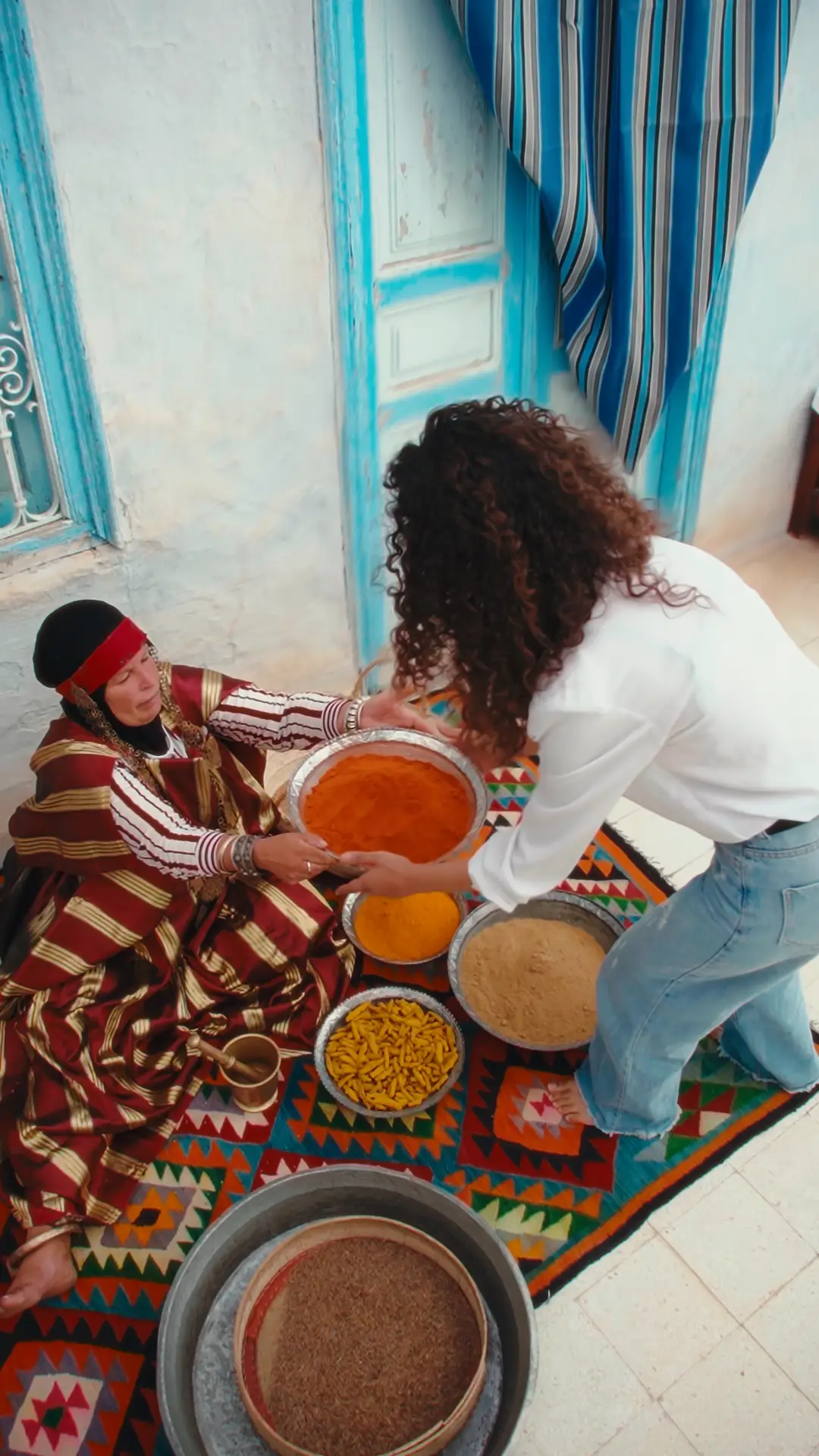
After meeting Lamia and Jamie in 2024, while participating in the USAID-supported Visit Tunisia programme, Soulaima and Khadija began welcoming Sawa groups to their spice-blending workshops, showing visitors how traditional spice mixes are made.
“Welcoming visitors has pushed us to look at our own heritage from a different perspective,” they tell me. “Things that may seem ordinary to us – our spices, our cooking techniques, our utensils, our recipes – can be fascinating discoveries for someone visiting Tunisia for the first time.”
Visitor feedback has since inspired cooking demonstrations and more immersive experiences. And now, the sisters are turning their attention back to the pastry for which their home city is famous. Their next collaboration with Sawa will see guests make makroudh from start to finish, preparing the dough and date filling and working with traditional utensils.
The benefits are financial, too. The sisters say working with Sawa has increased revenue, attracted new customers and strengthened their tourism offering. This September, they’re preparing to take another step with the opening of their first shop in Kairouan.
Around 100 miles south-east in Sfax, Dalinda Ellouze is discovering similar possibilities through Dose et D’mi, a business born from a desire to preserve Tunisia’s culinary heritage and pass traditional recipes from one generation to the next.
Among the experiences she offers is a workshop centred around laklouka, a traditional raisin-based sweet from Sfax. Dalinda says working with Sawa has created a new source of income, raised her profile and helped showcase Tunisia’s culinary heritage. She also sees opportunities to partner with other female artisans, spreading the economic benefits beyond her own business.
Further north, in Nabeul on the Cap Bon peninsula, floral-water distillation is deeply rooted in local culture. It was here that I met Rania Mansour, who runs Ezemnia, and showed us how she distils fragrant geranium flowers using traditional copper stills. The resulting floral waters are bottled for sale, while Rania also uses them to make condiments, jams, preserves and beauty products.
Since my visit, Rania has invested in larger distillation equipment and improved her set-up. Her workshops are now offered to travel agencies and media, while the experience itself has expanded to include the option of staying for lunch.
Sawa is also exploring experiences around the Kerkennah Islands’ UNESCO-listed charfia fishing tradition, an age-old technique using palm-frond barriers embedded in the seabed to channel fish with the tides.
For travellers, experiences like this offer something far richer than another souvenir to take home. For the women producing the food, they can create additional income, new customers and renewed appreciation for everyday skills.
Perhaps that’s where the real regenerative potential lies: not in reinventing Tunisia’s culinary traditions for tourists, but in recognising the value of what’s already there – and ensuring the people preserving that knowledge benefit when the rest of the world comes looking for it.